

Why Kentucky Limestone Water Matters for Bourbon
For centuries, the Kentucky River has been both a transportation route and a source of water for making bourbon, from mashing to cooling to aging, which makes the spirit a true product of the Bluegrass. Spend a day in Frankfort and someone will tell you that Kentucky bourbon comes down to the limestone in our water. They’re mostly right. (For the broader story of how the river shaped the industry, start with bourbon history along the Kentucky River.)
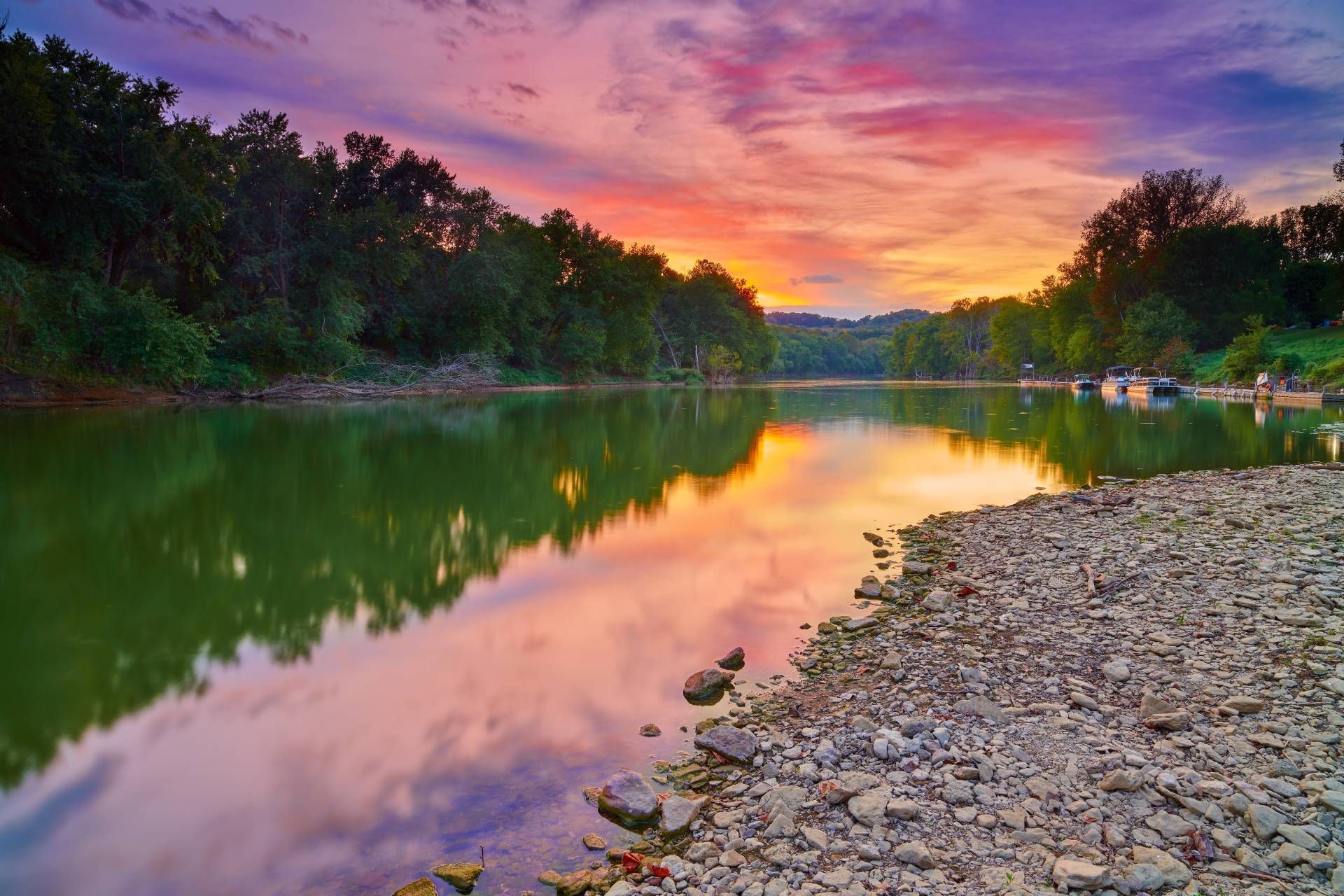
You can see the rock responsible from the deck of our boats. The gray bluffs along the Kentucky River are roughly 450 million years old, and they’re a big reason this stretch of river ended up lined with distilleries.
How Kentucky Limestone Water Shapes Bourbon
Central Kentucky sits on thick beds of limestone laid down during the Ordovician Period, roughly 450 million years ago—long before any animals lived on land. Back then, the region was covered by warm, shallow tropical seas teeming with marine life, including shelled brachiopods, corals, bryozoans, and trilobites. Over millions of years, the Kentucky River carved down through those ancient seafloors, and the towering bluffs you see from the water today are a cross-section of that history.
Farther upstream, in the dramatic gorge known as the Kentucky River Palisades, the river has cut deep enough to expose the oldest rocks at the surface anywhere in Kentucky. One of those prominent layers is the Tyrone Limestone—named for Tyrone, a river town in Anderson County where Wild Turkey distills today on the site of the historic Ripy distillery, drawing on the mineral-rich, limestone-filtered water that defines Kentucky bourbon.
Limestone slowly dissolves in rainwater, which is why the Bluegrass is full of sinkholes, sinking streams, caves, and springs. Rain that falls here doesn’t just run off. It soaks down through cracks in the rock and moves through it before resurfacing at a spring or well. That time underground is where the water changes.
How Limestone Naturally Filters and Enriches Water
Iron negatively flavors the water and groundwater that moves through limestone tends to come out low in iron, which is a large part of why early distillers went looking for limestone springs.
While the water loses iron, it picks up calcium and magnesium from the rock. Those are the minerals that make Kentucky’s water “hard.” The magnesium comes from dolostone, a close cousin of limestone rock. Yeast uses the magnesium and calcium to work its magic, and the minerals affect how efficiently the yeast turn the sugars in the mash into alcohol. Limestone water is an advantage but many distillers filter or treat their water before it goes into the bottle.
Good water is only part of the story. The minerals from our limestone substrate is a big part of the rich, fertile soil of the Inner Bluegrass, which is where we grow the corn and wheat distilled into alcohol.
See the Limestone on a Kentucky River Tour
The easiest way to understand all this is to see the river and distilleries up close. On the KY River Bourbon History Tour, a guided cruise, our captains cover six distilleries tied to this stretch of river. Along the way you’ll pass the bluffs, go through the working Lock and Dam #4, and see the Leestown Settlement and Daniel Boone’s grave from the water. If you want the background first, read up on the Kentucky River’s locks and dams and the strange story of Boone’s grave.
For a tasting, Bourbon and Boats brings a bourbon concierge on board to pour single barrel picks while you cruise past the Old Hermitage Distillery and hear the stories of Albert Blanton and E.H. Taylor Jr.
If you want to follow the water from the river to the rickhouse, The Old Taylor Tour pairs a BBQ lunch and river cruise with the Old Taylor Tour at Buffalo Trace and a progressive tasting of premium Buffalo Trace products. The Trace Tour runs in the other order, starting at Buffalo Trace and ending on the river.
Not sure which fits? Which Kentucky River Tour Is Right for Me? breaks them down.
Book Your Kentucky River Tour for 2027
Our season runs May through October, and the river is quiet from November through April, so now is a good time to plan your visit for 2027. Kentucky River Tours is based in Frankfort, Kentucky, and we offer a unique, one-of-a-kind way to see the Kentucky Bourbon Trail® that you can't find anywhere else. Give us a call at (502) 219-3318 or contact us to book your tour or to plan a private tour for your group.